
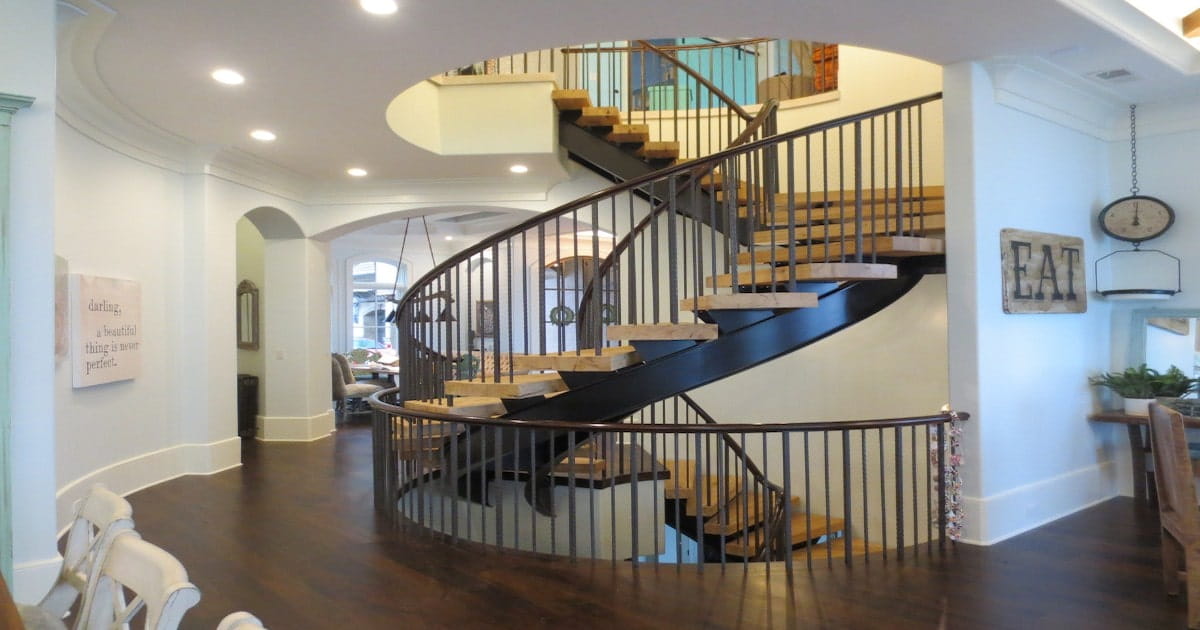
Homeowners can add a floating staircase during an Arizona remodel, but it depends on structural conditions, safety requirements, and early planning.
While floating stairways are often associated with new construction, many remodel homeowners in Arizona want to know whether an existing enclosed or traditional staircase can be replaced with a more open, modern design.
The short answer is yes, sometimes. But feasibility depends on how the existing home is built, where loads are carried, and whether the staircase is evaluated early enough in the remodeling process.
Learn how to determine whether adding a floating stairway is feasible in your Arizona stair remodel by identifying the structural and code limitations that affect feasibility.
Overview
- Floating stairways can be added during an Arizona remodel, but only when the home’s structure, load paths, and layout can safely support the design.
- Early planning is critical. A floating stairway is not a simple swap; it requires structural evaluation, code review, and coordination before remodel decisions are finalized.
- Homeowners who want a modern open look may still have good options even if a fully floating staircase is not feasible, including partially open stair systems or upgraded modern railings.
What Defines a Floating Staircase in a Stair Remodel?
In a remodel, a floating stairway is defined less by appearance and more by how the stair system is structurally supported.
Unlike traditional staircases, floating stairways rely on:
- Concealed structural supports
- Engineered attachment points
- Load-bearing wall or steel support integration
- Precise coordination with existing framing
This means a floating stairway cannot simply be “swapped in” without structural analysis.
What makes a staircase appear to “float” is not just the absence of visible supports. It is the way the structure is hidden while still safely carrying weight and meeting code requirements.
Structural Conditions That Determine If a Homeowner Can Add a Floating Staircase
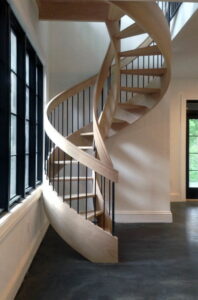
Most Arizona homes were not originally designed to support floating stairways.
Because many homes in Arizona are built on slab foundations and framed around conventional staircase layouts, several structural factors must be reviewed before a floating stair can be added.
Important structural conditions include:
- Wall construction and load-bearing capacity
- Framing orientation
- Floor and ceiling alignment
- Stair opening dimensions
- Available attachment points for support
This is why the custom staircase design process should begin with structural evaluation rather than aesthetics.
Identifying load paths early helps determine whether a true floating staircase is possible or whether a partially open staircase or alternative modern design would be a better fit.
Floating Staircase Safety Considerations for Daily Use
A floating staircase must do more than look modern. It also needs to feel safe and comfortable for daily use.
Floating staircase safety considerations are especially important in homes with:
- Children
- Pets
- Older adults
- Frequent entertaining
Key safety factors include:
- Tread depth and spacing
- Riser openness
- Guardrail design
- Handrail placement
- Slip resistance and durability
Modern design does not eliminate safety requirements; it increases the need for precision.
A floating staircase should feel open and architectural without becoming uncomfortable or visually intimidating.
Floating Staircases Must Meet Building Code Requirements
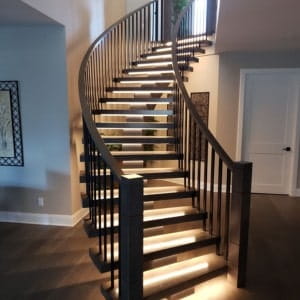
Even in remodels, floating staircases must comply with staircase building code requirements. Inspectors evaluate geometry, guardrail spacing, and structural attachment regardless of design style.
Addressing code early prevents redesigns and inspection delays later in the remodel timeline.
Material Choices Affect Both Performance and Design
Floating stairways depend heavily on modern staircase materials and finishes to create a balance between visual lightness and structural performance.
Common material combinations include:
- Steel stringers or concealed steel supports
- Hardwood treads for warmth
- Glass railings for openness
- Powder-coated metal details for durability
Material selection should also account for how the new staircase integrates with the existing home.
This includes matching or complementing:
- Flooring
- Wall finishes
- Trim details
- Architectural style
In a remodel, the staircase should feel intentional, not like a disconnected modern insert.
Regional Staircase Design Considerations Matter in Arizona
Regional considerations also influence the feasibility of a floating staircase in staircase design.
Arizona homes vary widely in ceiling heights, layout openness, and architectural style. A floating staircase that works in a Scottsdale contemporary home may not be appropriate in a more traditional Tucson or suburban Phoenix layout.
Regional factors that influence design include:
- Ceiling height
- Natural light availability
- Open floor plan potential
- Contemporary vs transitional architecture
- How the staircase connects major living spaces
The best floating staircases in Arizona remodels are not copied from inspiration photos—they are adapted to the realities of the home.
When Does a Floating Staircase Work Best in a Stair Remodel?
Floating stairways are typically most successful in remodels when:
- The staircase is evaluated early in the planning phase
- Structural reinforcement can be added if needed
- The surrounding layout supports an open design
- The staircase is treated as a central architectural feature
In some stair remodels, a fully floating staircase may not be practical. However, a partially open stair system, upgraded railing design, or more modern structural profile can still create a similar visual effect.
A staircase does not have to be fully “floating” to feel dramatically more open and modern.
FAQ About When to Add a Floating Staircase
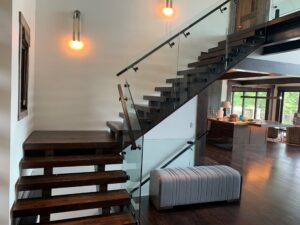
Can you add a floating staircase to an existing home?
Yes, in many cases. A floating staircase can be added to an existing home if the structure can support the design and the building code requirements can be met.
Do floating staircases require structural reinforcement?
Often, yes. Many remodels require reinforcement or concealed steel supports to carry loads safely.
Are floating staircases safe for families?
Yes, when they are designed correctly. Guardrails, tread spacing, and handrails can be integrated to support safe daily use.
Do floating staircases need railings?
Yes. In most cases, floating staircases still require guardrails and handrails to comply with code and ensure safety.
Can I Add a Floating Staircase Without Fully Rebuilding My Stairs?
Sometimes. A partially open staircase or modern railing upgrade can create a similar visual effect without a complete structural redesign.
Want to Add a Floating Staircase to Your Arizona Remodel?
The best way to know whether a specific type of staircase is possible is to evaluate the existing structure before design decisions are locked in.
Artistic Stairs works with Arizona homeowners, builders, architects, and designers to assess staircase feasibility, develop custom designs, and engineer modern stair systems that work in real homes.
Contact Artistic Stairs to review your remodel plans and explore options for remodeled stairs designed for your home.